Expected Future of DDOS Attacks

A Distributed Denial of Service attack is a malicious attempt to sabotage someone’s online activity. This happens when a botnet, which is a network of compromised devices, sends a large number of requests to the server to remove it. 

Disruption, loss of sales, and loss of trust from customers and partners are enough to shut down all businesses. However, they are often accompanied by ransom demands, data theft, and other devastating activities. 

A DDoS attack is a versatile weapon and is therefore popular with hackers nowadays. With the rapid development of technology, DDoS attacks are also increasing and becoming faster and more consistent with each passing year. For example, they do not require any technical skills now or even a large wallet, so anyone can use them for their use. What is the future of DDoS attacks? 

DDoS attacks are becoming more common: 

In 2020, DDoS attacks increased dramatically, in part due to the global pandemic. As people all over the world have to broadcast their lives on the Internet, hackers have not hesitated to seize this opportunity to wreak havoc and make money. According to Cloudflare reports, DDoS numbers increased significantly in the third quarter. 

While this was not the case in the fourth quarter, which led to a drop in the total number of attacks, other disturbing trends have emerged. For example, DDoS ransom and ransom attacks are becoming increasingly popular, and that is unlikely to change anytime soon. In any case, we can assume that the number of DDoS attacks will increase again. 

Every new IoT device offers a potential new bot that a hacker can use to expand his already large botnet. 

There were 7.6 billion active devices in 2019. This number is expected to rise to 24.1 billion by 2030. 

How 5G and Artificial Intelligence are changing DDoS attacks: 

As mentioned earlier, DDoS attacks have evolved to be accessible to everyone. They are also more demanding than ever. All thanks to the latest technological advances like AI, 5G, Wi-Fi 6, and more. 

Artificial intelligence and machine learning can help hackers identify weak passwords and automatically spread malware. In other words, they can now develop their botnets in no time with little effort. 

Today’s DDoS attacks are no longer static, but dynamic and therefore more difficult than ever to detect and block. In addition, the introduction of 5G enables more reliable low-latency communication, super-fast broadband, etc. Unfortunately, hackers are likely to use these advantages to launch effective DDoS attacks. 

Extreme Future of DDoS Attacks: 

Unfortunately, the current trend shows that DDoS attacks are becoming more frequent, massive, and effective. Expanding IoT devices and rapidly deploying 5G capabilities around the world will be a deadly combination. In addition, the ongoing digitization of companies has taken a big step forward after the COVID-19 pandemic. As a result, businesses of all sizes have a large chunk of their resources online, which makes them ideal targets. 

When it comes to protecting against DDoS attacks, the current situation is not very promising. Hackers are already successfully using cloud technologies to carry out DDoS attacks. Organizations need to quickly adapt similar solutions and implement them into their security stacks. However, hackers always seem to have a head start when it comes to methods, technologies, and tactics. 

In the first half of 2020 alone, there were over 4.83 million DDoS attacks. That number represents a sharp increase from the already alarming 2019 numbers, with the strongest activity being seen in the first few months of the lockdown from March to July. We can assume that the trend will continue until mid-2021 and beyond. 

Conclusion: 

Implement a layered cybersecurity solution to prevent a DDoS attack. This includes increasing bandwidth, configuring backup servers, updating for updates, continuously monitoring traffic, and so on. We also hope to have more useful and easy-to-use DDoS security tools shortly. 

The future does not seem to be the brightest, with the increasing popularity of DDoS, more effective, and more destructive attack tactics. However, we have the technology to fight them. We just have to learn how to use it to our advantage. There are signs that we need to pay more attention and invest more in research and protection against DDoS attacks. 

Logic Finder has some of the best experts in the field to teach and supervise the range of international and domestic security and cooperation issues, including threat identification, mitigation, security controls, cyber security conflict resolution, and governance problems affecting information security. You can contact us and register by clicking on the link below. 

https://www.logicfinder.net/ 

Cybersecurity Threats Can Affect Organizations

A successful cyberattack can cause serious damage to your business. This can affect the bottom line as well as the company’s reputation and consumer confidence. The effects of a security breach can be broadly classified into three categories: financial, reputational, and legal.

As companies store more data about themselves and their customers on the Internet, they become more and more vulnerable to cyber-thieves. Dealing with online criminals increases the cost of cybersecurity, which can ultimately reach consumers in the form of higher prices.

Logic Finder categorized some of the main ways cybercrime can slow down business today. Let us get started.

  1. The economic cost of a cyber-attack

Cyber-attacks often result in significant financial losses due to:

  • Theft of company information
  • Theft of financial information (for example, bank details or payment card details)
  • Steal money
  • Business interruptions (for example, inability to transact online)
  • Loss of business or contract
  • Cyberspace pioneering companies also often pay for repairs to affected systems, networks, and devices.
  1. Reputational Damages

Trust is an important part of the customer relationship. Cyberattacks can damage your company’s reputation and undermine your customers’ trust in you. In turn, this could potentially lead to:

  • Loss of customers
  • Lost sales
  • Reduced profits

The effects of reputational damage can also affect your suppliers or the relationships you may have with partners, investors, and other third parties involved in your business.

  1. Legal consequences of violations for cyber laws

Data protection and privacy legislation require that you ensure the security of all your personal information, whether it concerns your employees or customers. If this information is accidentally or intentionally exposed and the user has not taken appropriate security measures, they may be fined and penalized.

  1. Operational Disruption

In addition to the actual financial loss, companies are often exposed to the indirect costs of cyberattacks, such as the potential for major business interruptions that could lead to lost revenue.

Cybercriminals can disrupt the normal business of your business in various ways, infecting malicious computer systems that delete high-quality information or installing malicious code on a server that blocks access to your website.

Disruption of normal business operations is the preferred tool of so-called “hacktivists”, known for hacking into the computer systems of government or multinational agencies to report a bug or increase transparency.

For example, in 2010, hackers who went along with the credit card giants WikiLeaks, MasterCard, and Visa responded with attacks that temporarily shut down their websites.

  1. Losing Revenues Day by Day

One of the worst results of a cyberattack is a sudden drop in revenue as cautious customers move elsewhere to defend themselves against cybercrime. Companies can also lose money to hackers who try to extort money from their victims.

Example of this: Sony Pictures was attacked in 2014 when they were ready to release “The Interview”, a comedy that shows an assassination attempt on North Korean leader Kim Jong UN. Hackers stole confidential information, including embarrassing emails and reviews from your staff.

North Korea is believed to be behind the attack, although it has denied the allegations. As a result, Sony Pictures withdrew the film from most theaters in favor of an online release, a move that cost $ 30 million, according to the National Theater Owners Association.

Conclusion

We learned how cyberattacks could harm a business or business, protecting a business from cyberattacks is costly and can affect the relationship between the business and its customers. As cybercrime becomes more complex, businesses need to be one-step ahead.

Logic Finder’s IT and cybersecurity engineer team will carefully investigate the incident and keep you informed of the results. IT forensic can be performed as part of incident response measures or independently as needed. Our experts use elite cyber threat intelligence to investigate the breach, determine the likely cause, report progress to the appropriate parts of the PCI Security Standards Council, and help you mitigate and get out of your threat as quickly as possible Remove environment. Do not feel hesitate to ask your queries. Just click the link below.

https://www.logicfinder.net


Accidental sharing is the result of human error

Vulnerability testing, also known as a vulnerability assessment, assesses security risks in software systems to reduce the likelihood of threats occurring. The purpose of vulnerability testing is to limit the possibility that intruders/hackers gain unauthorized access to systems. This depends on a mechanism called VAPT (Vulnerability Assessment and Penetration Testing) or a VAPT test. 

A vulnerability is a flaw or weakness in the security practices, design, implementation, or internal controls of a system that could result in a violation of the system’s security policies. 


Need of Vulnerability Assessment Techniques 

  • This is important for the security of the organization. 

  • The vulnerability reporting and investigation process enables you to identify and resolve cybersecurity issues by assessing security issues before anyone or anything can exploit them. 

  • This process scans operating systems, applications, and networks for vulnerabilities, including poor software design, insecure authentication, and so on. 

Vulnerability Assessment: Security Analysis Process 

The safety analysis process consists of four phases: testing, analysis, assessment, and remediation.


  1. Vulnerability Identification Testing 

This step creates a complete list of application vulnerabilities. Cyber security analysts test the security status of applications, servers, or other systems by analyzing them with automated tools or manually testing and assessing them. Cybersecurity and network engineering also rely on vulnerability databases, vulnerability announcements from vendors, asset management systems, and feeds of threat intelligence to identify security vulnerabilities. 

  1. Vulnerability Analysis 

The purpose of this step is to determine the source and root cause of the vulnerabilities identified in step 1. Identifies the system components responsible for each vulnerability and its root cause. For example, an old version of the open-source library could be a major cause of the vulnerability. This provides a clear path to fix – updating the library. 

  1. Risk assessment 

The purpose of this step is to prioritize security vulnerabilities. This includes security analysts who assign each vulnerability a rating or severity based on factors such as: 

  • Which systems are affected by the problem? 

  • What data is at risk? 

  • Which business functions are at risk? 

  • Simple attack or compromise. 

  • The intensity of the attack. 

  • Potential damage due to vulnerability. 


  1. Remediation 

This phase aims to close security gaps. It is usually the joint effort of security agencies, personal and development teams, and operations to determine the best way to remedy or reduce each risk. 

Special rehabilitation measures may include: 

  • Introduction to new procedures, steps, or tools. 

  • Performance or configuration updates. 

  • Development and implementation of a vulnerable patch. 

Vulnerability assessment cannot be a one-time activity. To be effective, organizations need to implement this process and repeat it regularly. It is also important to encourage collaboration between security, operations, and development teams, a process known as DevSecOps. 

Vulnerability Assessment Tools 

Vulnerability assessment tools are designed to automatically detect new and existing threats that could target your application. Types of tools include: 

  1. Web scanners that test and replicate known attack patterns. 

  1. Protocol analyzers that scan threatened protocols, ports, and network services. 

  1. Network analyzers that help detect networks and identify warning signals such as lost IP addresses, corrupted packets, and the creation of suspicious packets from a single IP address. 

We recommend that you schedule a regular, automatic scan of all major IT systems. The results of these analyzes include an ongoing risk assessment process. You can find more by clicking the link below. 


Utilizing Logic Finder for CIA Triangle to Resolve Complicated Cybersecurity Challenges

Cybersecurity aims to protect the company’s digital assets from ever-increasing that how cyber-attacks can be reduced. Cybersecurity can be ensured by using appropriate security controls to provide various security features, such as deterring, preventing, and detecting cybercrime. 

The CIA Triad is also known as the Triangle, which contains various guidelines for information security for an organization. This is used to achieve the right balance between these three attributes for the better security of an organization. The main purpose of cybersecurity analysts is to guarantee the confidentiality, integrity, and availability (CIA) of data and services. The CIA is also known as the CIA Triad.

The CIA Triad is critical to cybersecurity, provides critical security features, avoids compliance issues, ensures continuity, and damages the company’s reputation. In this blog, you will learn how the CIA Triad can improve your company’s cybersecurity.


What is confidentiality? 

Confidentiality: Guarantees the privacy of confidential information while it is in transit over a network. Certain proactive steps must be taken to prevent confidential data from being disclosed without authorization and made available to affected parties. Malicious agents should not intercept data for nefarious purposes. Several implementations can be integrated to ensure data privacy. 

Cryptography: Cryptography is the smooth solution in this regard. Above all, encryption ensures the confidentiality of sensitive data. Converts plain text to data into ciphertext that human beings cannot read. Authorized devices can only understand ciphertext. Encryption involves two basic security controls, including symmetric encryption and asymmetric encryption. Using strong passwords and two-factor authentication are some of the other methods of ensuring privacy.  

In addition, you can also use steganography to hide data in other data types such as images, audio, or video files. It is very difficult to compromise the obfuscation of sensitive information in large media files. 

What is integrity? 

Information can not be modified without detection. Integrity ensures that the data is stored is correct and that no one has altered the data in any way. Data sent back and forth use protection methods such as hashing and checksums. The data needs to be protected from modification and deletion by unauthorized users as well as users’ mistakes such as file deletion.


Integrity aims to prevent data from being manipulated, modified, or modified in an unauthorized way to achieve malicious purposes. This means that the data sent must be received intact and unaltered by an authorized person. Integrity is important for data, both in transit and on storage media. Data integrity is essential for e-commerce and business websites. Various cyber-attacks that compromise data integrity include a Man-In-the-Middle (MITM) attack, which penetrates the webserver and introduces malicious code into databases. 

Developers to verify data integrity usually provide the use of hashing algorithms such as MD5 and SHA1. Other technologies include certificates, digital signatures, and non-waste. 

What is availability? 

Availability: Availability is officially a security service that guarantees constant availability of resources and services only to authorized parties promptly. Reliable hardware must be used to provide consistent services to a large number of customers in all organizations. There should be less downtime with updating and backing up sensitive data to use external devices in case of data loss. 

The information created and stored by an organization needs to be available to authorized users and applications. If data is lost, it can be restored using Availability. Information needs to be accessible and well taken care of. Things should be maintained such as redundancy, backups, and recovery features. There should also be some good protection against threats placed on the system as well.

Technicians should also be trained in proper disaster recovery and backup plans. Environmental issues are also a large part of Availability, issues such as extreme cold and extreme heat can cause big problems with sensitive equipment.


Quick recovery plans to the left should be followed in the worst case. Other important security checks for accessibility are backups of data, corrections, and redundant systems. The redundancy ensured fault tolerance. This means that the main system is not working and that the other machine is available to continue providing features and services. In this case, the security analysts forward the traffic or workload to a security system. 

The importance of the CIA Triad for cybersecurity:

 Security breaches and data theft are becoming a problem in today’s business environment. Recent reports and surveys reflect the unfortunate picture of the organization’s approach to cybersecurity. The latest Facebook violation scandal is the honor that millions of users have endangered disadvantaged women. Most companies have unprotected data due to inadequate policies, which can lead to data breaches and heavy penalties due to compliance issues such as the GDPR – General Data Protection Regulation.  

In this case, organizations should implement the above security controls along with various other controls (such as SIEM and SOAR) to improve their cybersecurity position. 

Experienced Logic Finder cybersecurity engineers can provide you with an assessment, roadmap, architecture design, and implementation plan, plus integration assistance to successfully transition to a hybrid cloud environment. We help you analyze, plan and execute successful transitions to the right virtual or physical environment to help you develop applications faster. Like migration to Office 365 and SharePoint. To get more details of this training course, check this link and register yourselves 

https://www.logicfinder.net/ 


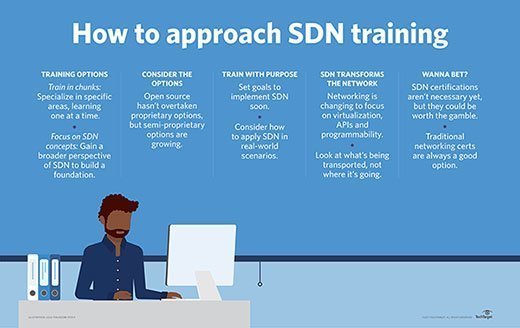
What It Takes To Be A Pro In SDN Career

SDN is the future which means we will have a career in it too short. SDN engineers will be required and vacancies will be open too. The security agency and networking industry have very unique perspectives on SDN careers. Vendors will need the NIDS and NIPS to train the customers with the new technology. The companies have to decide now either they want their new employees to have SDN training or will hire new staff. A whole evaluation has to be done with completely new awareness.

The industry should think seriously about SDN.

Enterprises approach towards SDN

SDN training and careers
                                                              Starting SDN training

How to decide which employee is best for you? What are the right skills for the cybersecurity engineer? Logically thinking it is much economical to train the existing employees rather than new hiring.

A proactive, top-down strategy is required for definitive training opportunities. It allows the teams to work together. Opportunities should be provided to instill confidence in the employees’ abilities. The opportunities include:

  • Cybersecurity Boot camps
  • Hackathons
  • Formal training
  • Certification.

It is a motivation for employees. It is the responsibility of IT professionals to train the employees and control their careers towards SDN in a professional way.

In this way, employees do their best for the companies they are working for and make intellectual moves in their skill sets. Good career stewards, for example, do their best work for their employers, while also actively making progress intellectually, career-wise, and in skill sets. But, do every employee need to be a programmer for understanding SDN skills? Not. The networking concepts are more than enough. To have a knowledge of software it is not always necessary that you should know how to code. Instead, the understanding of the ecosystem is enough to get things done. Any learning opportunity will work wonders with the basic knowledge of the ecosystem especially in the case of SDN. Just a plan has to be devised by the professionals and everything will be sorted.So, existing employees can also set their careers in SDN.

If you are a cybersecurity engineer and fear where to learn all these things about SDN then we have a piece of good news for you. Logic Finder can train such engineers who do not know to code but want to set their goals the in SDN field. Get your hands on our SDN training course with us. The details are in the link below:

https://www.logicfinder.net/sdn/